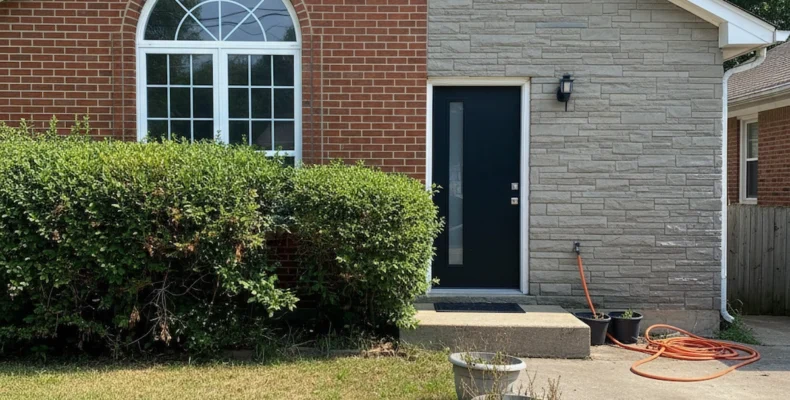
The most overlooked element in exterior design is the groundwork. We’re talking about layout, lighting, and proportion. These basics determine how your outdoor space flows and connects to your house. Yet most homeowners skip right past them.
Instead, they jump to plants, furniture, and decorations first. And the foundation work gets left behind. Without it, even expensive landforms look patchy. Get these basics sorted early, and everything else comes together.
In this article, we’ll cover the overlooked elements behind a polished exterior. You’ll also learn how to spot common mistakes and fix them before they cost you.
Let’s start with the basics.
Exterior Design Mistakes: What Most Homeowners Miss
Most homeowners skip the groundwork. The problem is that site surveys, layout planning, and lighting decisions are all part of it. These need to happen before a single plant goes in. Without these, even great ideas won’t come together.
The fixes below tackle each one.
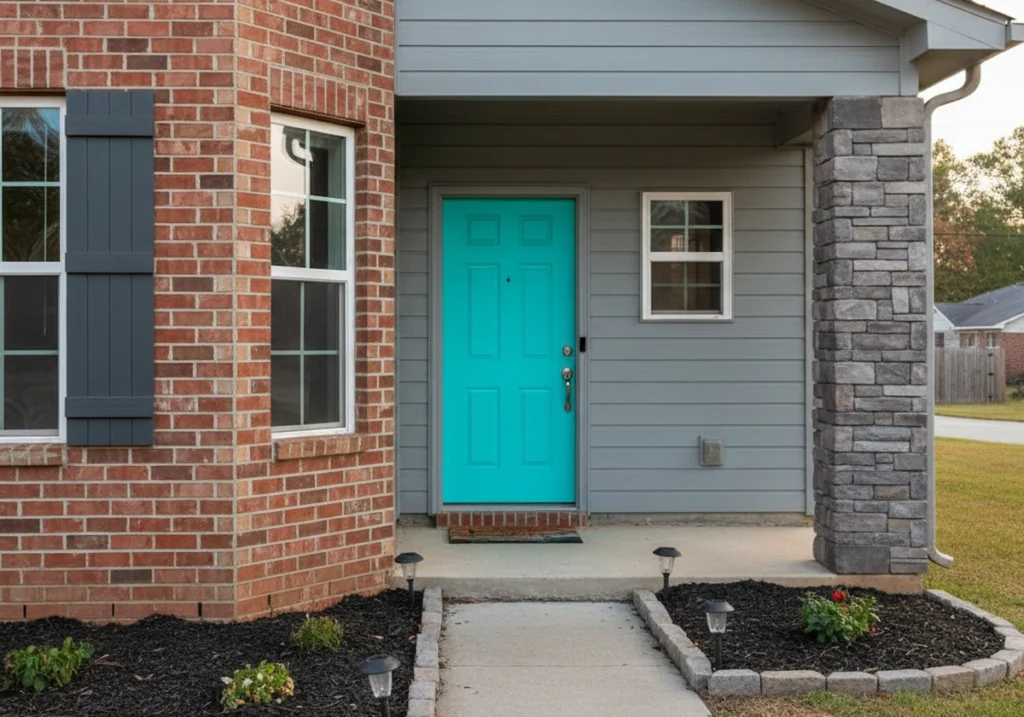
Skipping the Property Map Step
A property map gives you a bird’s eye view of your layout before you start. You can sketch one on graph paper to mark boundaries, slopes, and where utilities run underground.
When the map step gets skipped, problems follow, like trees going in over pipes or structures ending up in the wrong spot. We’ve seen this happen, and it never ends well. Everything has to come out again.
An early survey catches these mistakes before they happen, and that saves real money down the track.
Poor Geography Layout Choices
It’s easy to get the layout wrong. Overcrowding plants, ignoring pathways, and blocking natural light from your windows are common examples. We see these mistakes again and again.
Based on our observations, a good layout considers how people move through the yard and where they naturally pause. Think about how your garden looks from inside your living room, not just when you’re standing in it.
Underestimating Outdoor Lighting
Outdoor lighting often gets added last, but it deserves attention much earlier. Why? Good lighting adds safety, extends the hours you can use your space, and highlights your best garden features.
Research backs this up. A study found that adding light towers to housing developments reduced outdoor nighttime index crimes by 48%. Lighting zones need attention early in the project.
The reason is simple: open ground gives you full access. And trenches can go where they need to go, and cables can run in straight lines. Once plants are in and pathways are laid, running wires means working around them. That kind of digging is slow, messy, and far more expensive.
Your Outdoor Space and Architectural Style: Finding the Balance
Finding the balance between your outdoor space and architectural style starts with visual harmony. Your garden and house should feel like they belong together. However, mismatched styles make the whole property look disjointed. But when everything aligns, the result speaks for itself.
A few simple shifts can get you there.
Does Your Design Match the House?
Your planting design works best when it matches your home’s architectural style. A cottage garden next to a modern house is a good example of styles that clash. They speak different visual languages, and that disconnect shows.
To avoid this, take cues from the house itself. For example, contemporary homes call for clean lines, while traditional homes do better with softer edges. Once the plants and materials match the architecture, everything pulls together, and the property feels unified.
Creating Flow in Your Own Terrain
Getting this flow right takes planning. It begins with curved pathways, which guide you forward from one area to the next. From there, repeated plants take over by adding rhythm that keeps the eye moving.
That’s why you should add clear lines to the mix, and the whole space starts to feel open and connected. Leave any of these out, and dead ends start appearing. We’ve all walked into that awkward corner with nowhere to go.
The Front Door as a Focal Point
Your front door is where curb appeal starts because it sets the tone for your whole property. It’s the first thing visitors see, so framing it well is worth the effort. A simple way to do this is with plants on either side and lighting above, both of which draw the eye to the entrance.
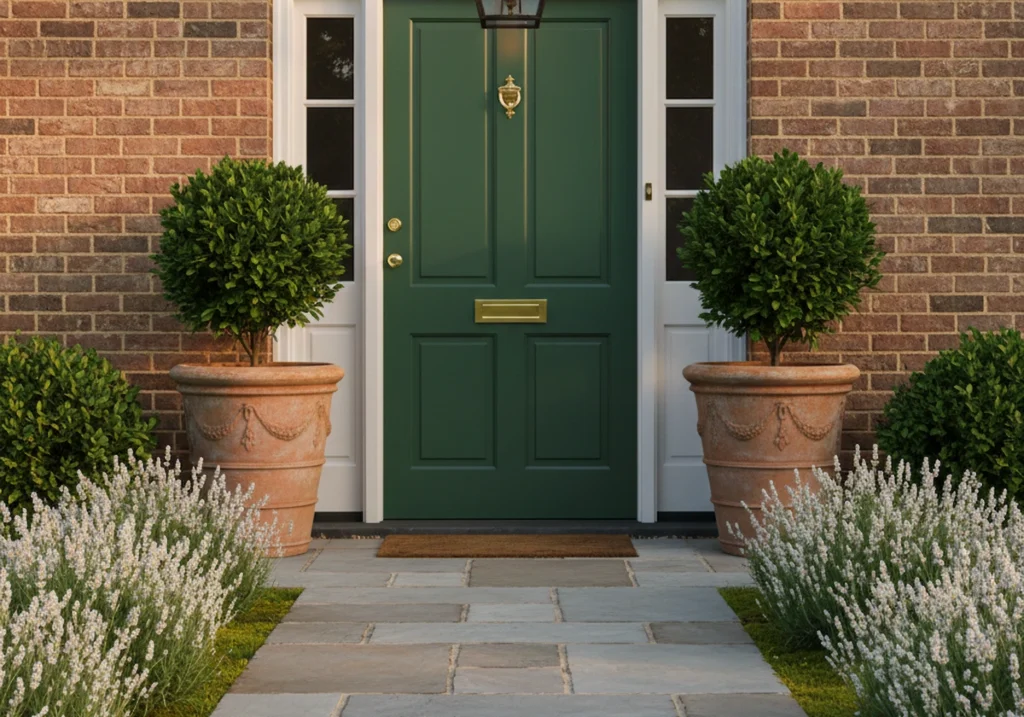
A clear path that guides visitors straight to the door adds to the effect. Even small touches like a bold paint colour or new hardware can lift a plain door instantly. These updates make the whole front of your house feel more polished.
Design Features That Deliver Real Improvement
Layering plants, repeating materials, and tidying small details can lift your outdoor space on its own. These are simple changes, but the payoff is visible straight away.
Here’s where to put your energy for the most significant payoff.
Layering for Depth and Interest
Layering arranges plants by height. That means ground cover stays low, shrubs fill the middle layer, and large trees anchor the back. The result is an added scale that makes even small gardens feel fuller. And you don’t need a complex planting scheme to get this effect. A mix of flowers, textures, and leaf shapes is enough to keep your garden looking interesting through every season.
Repetition Done Right
Repeating certain plants, materials, or themes creates rhythm across your yard. It ties different areas together nicely.
Over time, we found repetition needs balance. Too much of it makes the space feel dull, and too little makes things look thrown together. So the goal is to find the middle ground. A good starting point is picking two or three elements to repeat. For instance, stone edging works well in one area, brick accents in another. Together, they tie the whole yard together naturally.
Finishing Touches
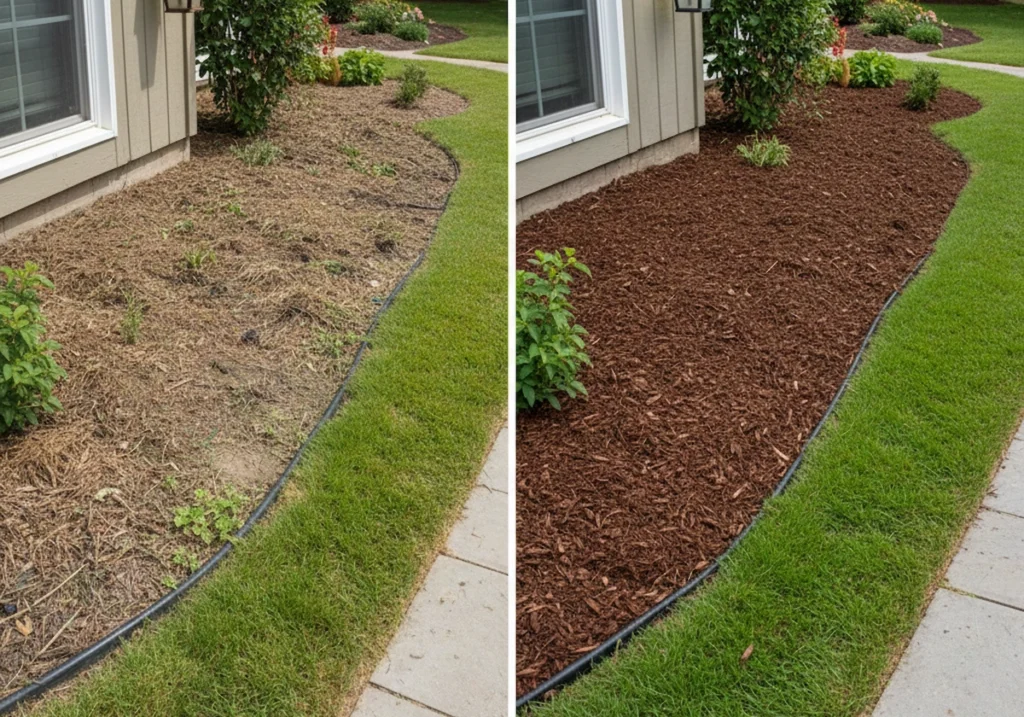
Three simple updates deliver instant results. Start with mulching your garden beds. It holds moisture and blocks weeds. Next, edge your grass to add sharp, clean lines that look professionally done.
Finally, swap out old lighting fixtures. The difference shows in minutes. All three updates clean up your space and deliver visible results fast. So, put them together, and your space looks cleaner straight away.
Ready to Rethink Your Exterior?
Exterior design mistakes happen more often than you’d think. They usually start with poor planning, mismatched styles, or overlooked details. Any of these can make an outdoor space feel incomplete. Most of these issues have simple fixes once you know where to look.
This article covered property maps, layout planning, outdoor lighting, and architectural harmony, the basics that actually count. We also explored layering, repetition, and quick wins that deliver real results without draining your budget.
Need expert advice for your next project? Bell Philips has the resources and inspiration to help. Get in touch today and create an outdoor space you’ll actually love.