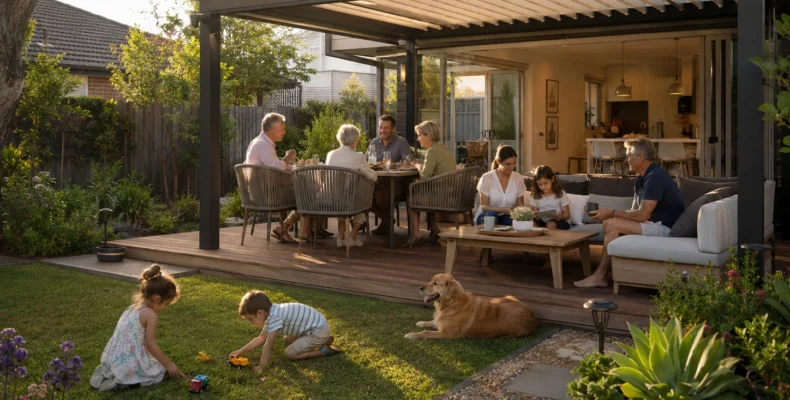
Most families spend years perfecting their interiors and leave the backyard as an afterthought. They repaint walls, upgrade appliances, and swap out flooring, while the garden quietly loses its shape and purpose year after year.
A flexible outdoor design solves those gaps before they become expensive problems. When every zone has a clear function, your outdoor living space earns its place in the home rather than sitting idle at the edges of daily life.
Thinking about where to start? Don’t worry. This guide covers landscape design, outdoor furniture, and garden planning so you can make confident decisions at every stage.
Flexible Outdoor Design: Why Your Backyard Needs to Grow With You
Flexible outdoor design means building your yard around zones that serve different purposes and adjust naturally as your family’s needs evolve. Nine times out of ten, homeowners plan for right now, and that’s why so many yards feel outdated five years down the track.
The good news is a well-planned space rarely needs a complete overhaul when circumstances change. Hardscaping elements like pavers, retaining walls, and defined pathways form the backbone of any adaptable layout.
And landscape design builds on that same foundation. For instance, a flat open area near the house gives young kids room to run today and naturally becomes a dining or entertaining space as they grow. Those foundational decisions age well.

You adjust the details around them over time, and the yard keeps working. However, skipping that planning stage is when the renovation bill arrives without warning.
Families with young kids face a very specific version of this challenge, and the yard needs to answer for it directly.
Outdoor Living Spaces for Families: From Toddlers to Teenagers
A backyard gives kids screen-free time in the open air while parents get on with their day, all within easy eyesight. It’s one of the few places at home where children can actually move, get messy, and forget their devices exist. That potential, though, depends entirely on how the space gets designed.
Here’s how it breaks down across two key stages:
Landscape Design Ideas for Young Kids and Active Play
The right landscape design gives young kids a safe, stimulating space without sacrificing style or function. The table below shows what that looks like in practice:
| Age Group | Recommended Feature |
| Toddlers (1–3) | Soft grass, sandpit, shaded seating |
| Young kids (4–7) | Climbing frame, open lawn, garden path |
| Older kids (8–12) | Sports zone, garden beds, bike track |
Soft lawn areas are the first priority. They give toddlers safe ground to explore freely, and good soil beneath soft turf cushions the impact of falls. Any parent of a toddler will tell you that alone saves a lot of unnecessary trips inside.
Sun exposure is a separate concern to plan for early, especially in Australia (summers here don’t exactly go easy on little ones). A shade structure positioned over the play zone keeps kids outside for longer and reduces the risk of overheating.
Even in limited space, a simple garden path along the yard edge gives young children somewhere defined to ride, run, and burn energy. This leaves the rest of the yard free for the adults, the garden, and whatever comes next.
Garden Beds and Quiet Zones for Older Kids and Teens
As kids get older, the play equipment comes down, and the need for personal space goes up.
Raised garden beds work really well at this stage. They give older children a hands-on hobby that builds patience, focus, and a connection to nature that sticks. Plus, clean borders around each bed keep the yard looking intentional rather than thrown together.
Not every teenager wants to garden, though. That’s why screening plants and low garden walls create a defined corner they can call their own, somewhere to sit, decompress, and just exist outdoors. It keeps them outside without feeling like they’re being monitored.
That mix of shared and private zones stops the space from feeling chaotic and unclaimed. Each person gets a corner that suits them, and the whole place feels purposeful as a result.
Outdoor Furniture That Works Now and Five Years From Now
Want outdoor furniture that never feels cramped or outdated as your family grows? Then buy for the family you’ll have in five years, rather than just today.

These four points are a good place to start:
- Modular Settings Over Fixed Pieces: A fixed outdoor setting gets outgrown fast. Modular furniture is basically a set you can keep adding to over time, rearranging pieces as the family gets bigger and gatherings get louder.
- Materials Built for Australian Conditions: Powder-coated aluminium and teak are two of the most reliable choices you’ll find. They handle heat, humidity, and the odd downpour that comes with living in Australia, and still look good years later.
- A Dining Area That Anchors the Yard: A well-placed dining area gives everyone a natural spot to gather for meals, catch-ups, and everything in between. When you get the indoor-outdoor connection right, even a smaller yard starts to feel surprisingly generous.
- Shade and Shelter for Year-Round Use: Sometimes you just want to sit outside without the sun beating down on you. A pergola or shade sail over the main seating area makes that possible all year (not just on perfect weather days). Plus, your guests stay longer when they’re actually comfortable.
Neutral, timeless pieces tie the whole yard together across different family stages, rarely needing a full redesign along the way. For example, a modular setting bought for a young family of four can expand easily to seat ten when the kids start bringing friends home years later.
A well-furnished yard still needs a solid plan underneath it.
What Landscape Architecture Can Teach Every Homeowner
Most homeowners plan their backyard by feel. They see something they like, buy it, put it somewhere, and hope it works. Sometimes it does. More often, though, the yard ends up looking fine but never quite functioning the way the family needs it to.
Landscape architecture is the discipline that changes this. It sounds formal, and yes, it’s a field with university degrees and professional practitioners who design everything from city parks to large public spaces. But the core thinking behind it is simply understanding how people move through a space. Professionals think about where the sun hits, how water drains, and what the soil can support before any physical work begins.
Urban design runs on the same logic. A well-designed public space feels comfortable and easy to move through because someone mapped out how people would use it first. Residential yards benefit from exactly the same process.
We saw this play out with a family in NSW who came to us frustrated. They had a decent-sized backyard that never felt right. The adults had nowhere comfortable to sit, and the whole space felt like wasted potential. Our Bell Phillips team redesigned the zones and repositioned the outdoor living area. Everything started working together almost immediately.
That kind of result is available to any homeowner. The difference is simply in how early the planning starts.
Planning Outdoor Spaces With Retirement in Mind
When each of your kids eventually leaves home, your backyard shouldn’t feel like an abandoned playground. The yard that worked perfectly for a busy family of five looks very different when it’s just the two of you. And that shift happens gradually (most people don’t see it coming until it’s already there).
Planning for retirement doesn’t mean a complete redesign, though. Small, gradual adjustments made early save a lot of time, money, and frustration later.
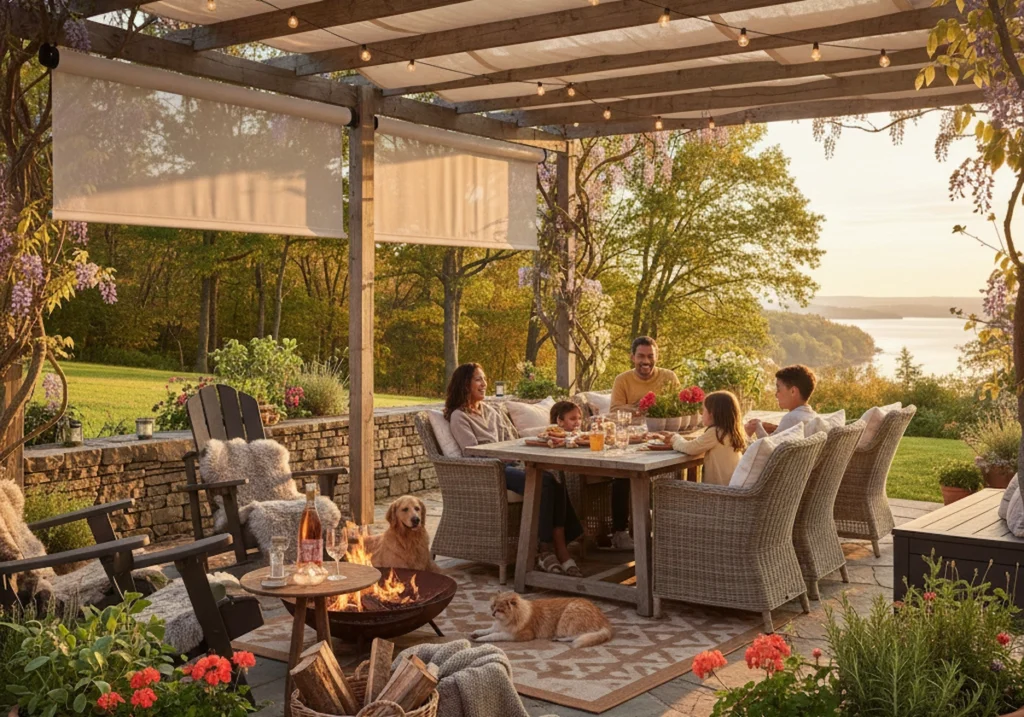
You can start with the basics. Raised garden beds mean no more crouching down for hours on aching knees. Pair those with level, even pathways, and moving around the yard stays safe and comfortable regardless of mobility. A well-positioned deck ties it together nicely. It gives you somewhere to sit in the morning with a coffee, out of the wind and away from direct sun.
Retirement also frees up time to enjoy an outdoor kitchen properly. In practice, cooking and entertaining outdoors stops being a weekend effort and becomes part of everyday life. An outdoor kitchen makes everyday entertaining genuinely easy.
A low-maintenance garden supports all of that comfort without adding to your workload. Native Australian plants need far less water and attention than exotic varieties and free up hours you’d otherwise spend managing the garden. A small moving water feature adds a relaxing quality to the space too (and there’s something about the sound of water that makes any outdoor area feel more like a retreat).
The earlier those decisions get made, the more years you get to enjoy them.
Start Designing a Backyard Your Family Will Love for Years
The difference between a yard that works and one that rarely comes down to budget. It comes down to timing and the decisions made early enough to actually stick.
Good outdoor design ages well. The zones you create today, the garden beds you establish, the furniture you invest in, all of it builds into a space that keeps paying off as the years go on. That’s not wishful thinking. We see it in every project where the planning started early.
If you’re not sure where to begin, start with the stage your family is in right now and ask what comes next. Pick one zone, get the furniture right, and let the garden follow. The yard takes shape gradually, and before long everything starts working for everyone using it.
The Bell Phillips team has helped families across Australia create outdoor living spaces that grow with them year after year. If you’re ready to start that conversation, visit bp-k.com and let’s talk about what your backyard could look like.