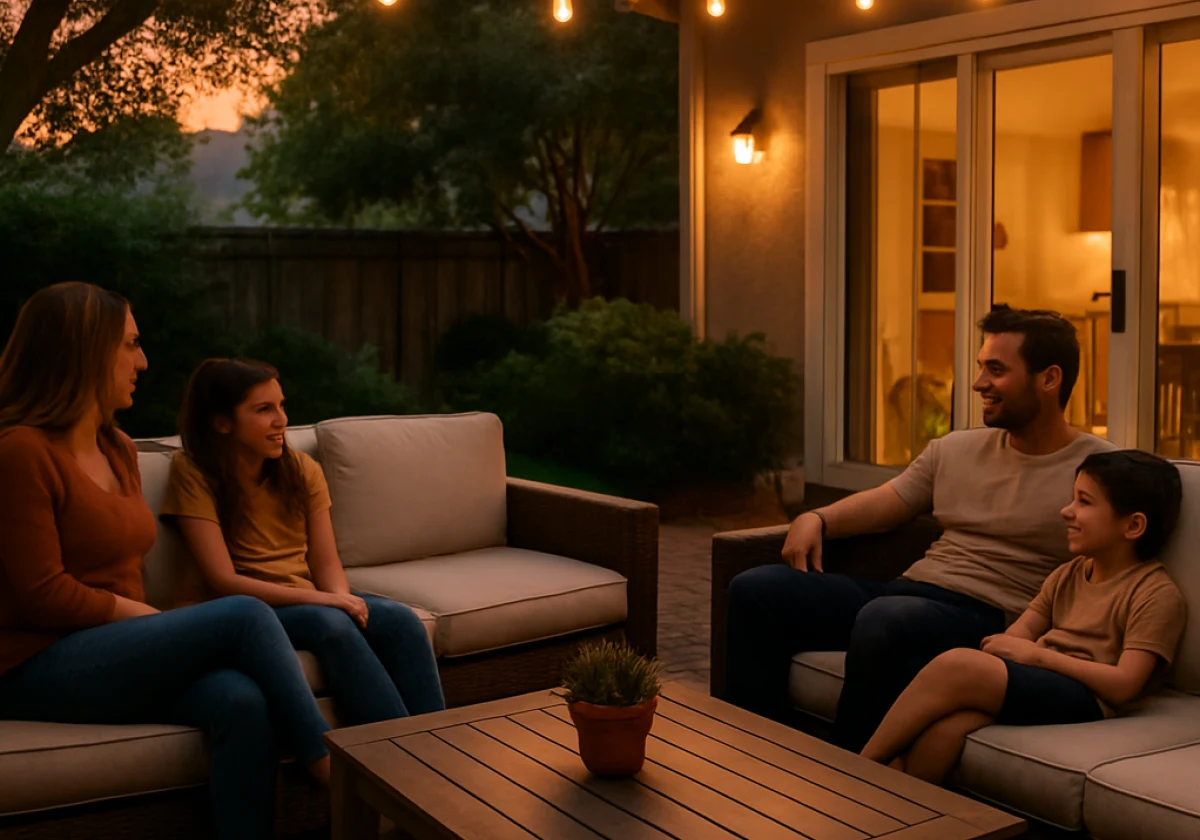
Outdoor living creates a more flexible home entertainment area by adding rooms you can rearrange for any gathering. A deck that holds Sunday lunch can take a projector screen by Friday night, and nothing inside the house moves.
Yet many Aussie backyards sit half-used, because the layout never gave anyone a reason to walk past the back step. We see that pattern constantly at Bell Phillips Outdoor, where good lawn stays empty while everyone crowds into the kitchen.
This guide covers zoning, furniture, and small fixes that keep the area working through every season. Grab a tape measure and read on.
Why Does an Outdoor Entertaining Area Make Your Home Feel Bigger?
A well-planned backyard gives you extra space to relax, dine and entertain without extending the house. Those rooms usually cost less per square metre than a built extension, because you’re not paying for walls, a roof and a second bathroom.
Three things decide how much extra room any outdoor entertaining area design gives you:
Where Your Indoor and Outdoor Spaces Meet
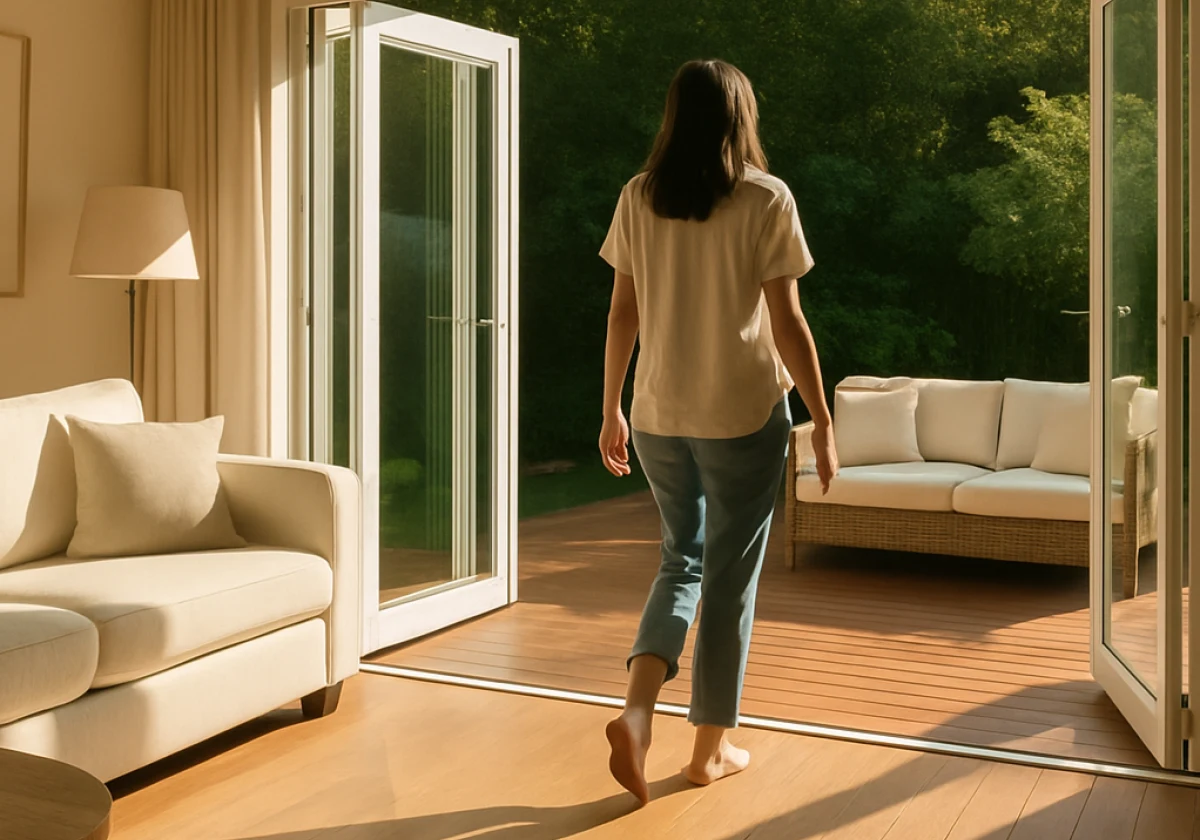
Your indoor and outdoor living spaces meet at the threshold, and that connection decides whether guests drift outside or stay bunched around the kitchen bench. If the entrance feels awkward or difficult to cross, guests may prefer staying inside.
So match your deck height to the indoor floor level. We recommend keeping any step under 20 mm, because a raised lip reads as a barrier to anyone carrying a plate.
Wide sliding or bifold doors make that connection feel even more open by creating a wider passage between the two spaces (the change shows up within the first week).
One Area, Many Jobs: Dinner, Movies and Kids
One outdoor entertainment space can run a weeknight dinner, a Saturday film night and a kids’ birthday party without any rebuilding. You can simply rearrange the furniture for each occasion.
For a movie night, move the alfresco dining table aside and bring out beanbags. Lightweight chairs and foldable tables also make it easier to clear space when the kids need room to play. A pale fence or blank wall nearby can then double as a projector screen after sunset.
Just keep the seating flexible so guests can move around comfortably and everyone gets a clear view.
How Much Room Do You Really Need?
You need roughly 3 by 4 metres for eight seated guests, depending on the table size and space needed to move chairs. If an outdoor kitchen or BBQ shares the area, allow another 2 metres for cooking and movement. After all, cooks need enough room to work without blocking guests.
Measure before you buy a thing, since in our experience most crowded outdoor entertainment areas start with furniture someone chose on a hunch.
Backyard Entertaining Ideas for Dining, Cooking and Lounging Zones
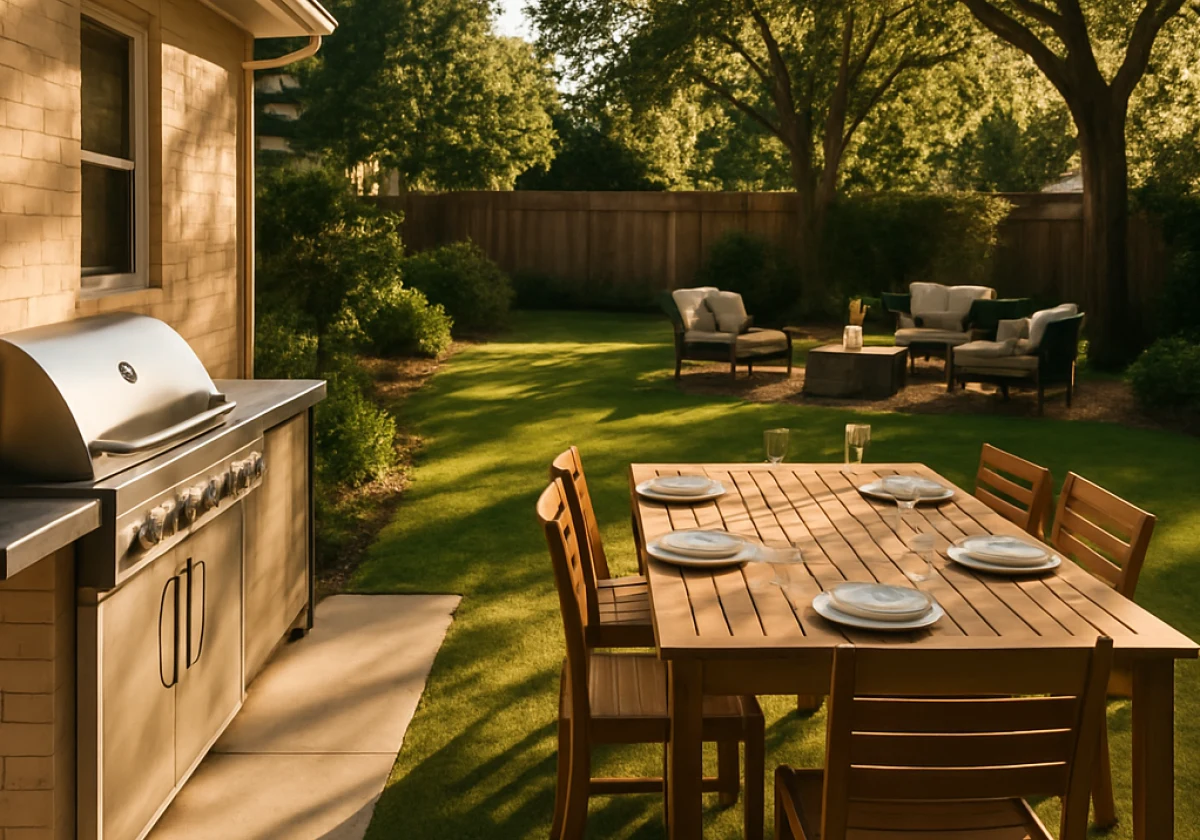
Most backyards fail as entertaining spots because everything happens in one crowded corner near the barbecue. Guests queue behind the cook, kids cut through the smoke, and whoever carries the salad has nowhere to set the bowl down. That’s why you should separate your backyard into cooking, dining, and lounging zones to reduce crowding without taking up extra space.
Start the cooking zone near the house, where access to gas, power, and the kitchen may be easier. Place the outdoor dining area beside it rather than directly in front. That way, carrying plates takes less effort, and guests won’t block the cooking area.
For the lounging zone, choose a spot away from the cooking and dining areas, perhaps near a tree or fire pit. A shaded location also gives guests somewhere comfortable to sit during the day. The World Health Organization recommends seeking shade when UV radiation is strongest.
Once you’ve planned the three zones, consider how people will move between them. Leave enough walkway space for guests to pass comfortably, especially around tables and chairs. What’s more, you can change the surface underfoot to mark each boundary (the shift from timber decking to pavers reads instantly).
The lounging zone deserves attention too, since it gives guests somewhere to relax after eating and keeps the dining area clear.
Outdoor Living Design: Choosing Furniture That Works Year Round
Good outdoor living design starts with pieces that earn their keep every month of the year, not just on warm summer evenings. After all, a setting that stays under a cover for months takes up space you could use for something else.
Weight, materials, and warmth decide whether a setting survives twelve months, so work through them one at a time.
Seating You Can Move in Under a Minute
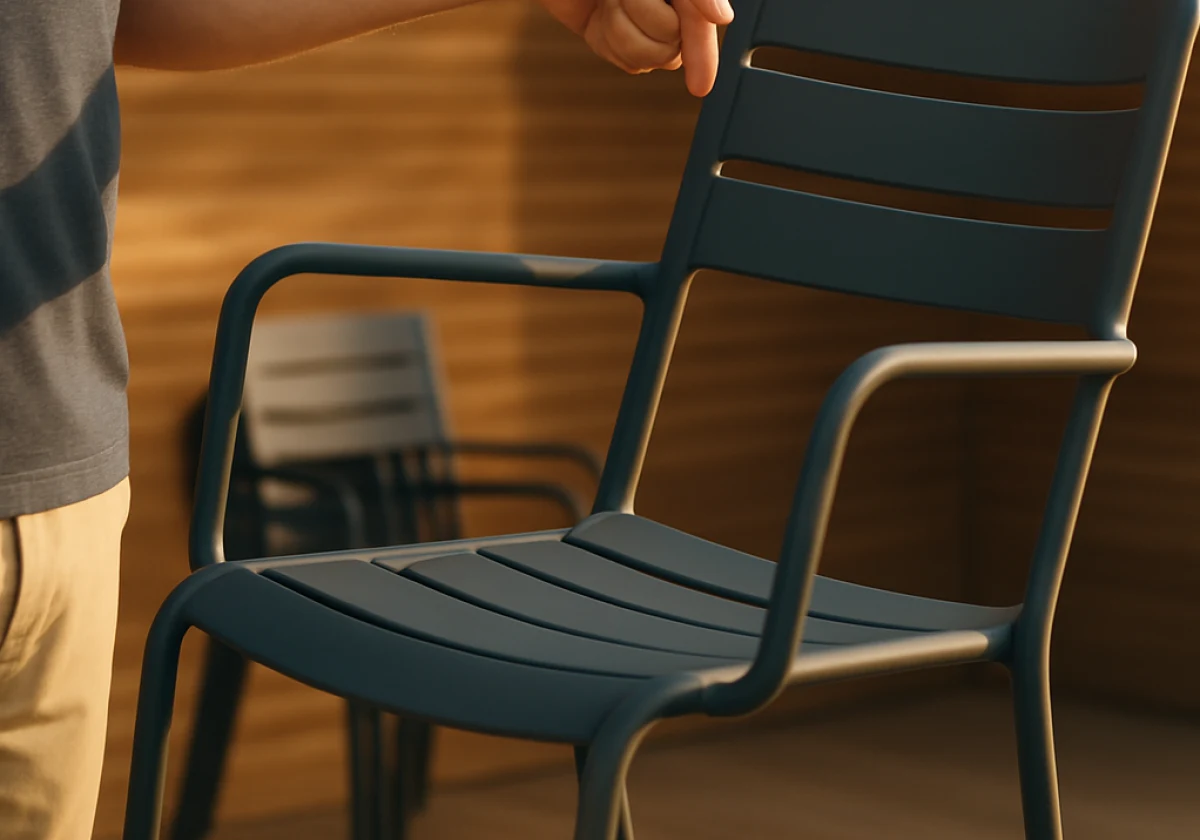
Choose chairs that one person can lift and move easily since heavy furniture takes more effort to rearrange when you need space for different activities. For example, a powder-coated aluminium chair might weigh around 4 kg, compared with 12 kg for a solid timber chair. That weight difference makes aluminium chairs easier to move.
Stackable designs help too, since you can store extra chairs in a small corner and free up the deck for dancing or kids’ games.
Materials That Handle Sun, Rain and Wind
Strong Australian sunlight fades outdoor fabrics over time, so choose UV-resistant materials such as solution-dyed acrylic for your cushions. The SunSmart UV guide recommends sun protection when UV levels reach 3 or above.
For frames, marine-grade stainless steel and spotted gum both last almost a decade outdoors, though the timber needs regular oiling to maintain its appearance. Regular cleaning also helps prevent dirt and moisture from building up on the frames.
Beyond the materials, the colour you choose affects how your furniture looks over time. Pick a colour you’ll still love in five years. Neutral shades like beige and grey are easier to match with new cushions or other outdoor accessories if you change your setup later.
Lighting and Heating That Keep the Space Warm
Lighting and heating extend your outdoor entertaining season by keeping the area comfortable during cooler evenings. Start with string lights hung at 2.4 metres to give the area a soft overhead glow. Meanwhile, gas heaters and fire pits can provide warmth within roughly a 3-metre radius, depending on the conditions.
The amount of light deserves attention too. We’ve installed enough outdoor lighting to know that excessive brightness is a common mistake. That’s why we recommend several softer lights instead of one bright floodlight to create a more comfortable atmosphere.
Small Patio Ideas That Open Up a Tight Outdoor Entertainment Area
Limited space makes outdoor entertaining difficult, but a few small changes can make your patio feel more open. The right layout and furniture choices help you use the available space more comfortably.
These four patio ideas suit any outdoor patio under 20 square metres.
- Build Up Rather Than Out: Make use of vertical space with wall-mounted planters, a vertical garden or a slim pergola. These features draw the eye upward and leave the floor clear. A few planters along the fence add greenery without taking space away from seating.
- Swap the Dining Table: A narrower table, around 80 cm wide, gives guests more room to move around. Rectangular designs fit neatly along one side of the patio. You could also add benches that tuck underneath when nobody’s eating.
- Bring the Kitchen Outdoors: Nobody wants to miss the conversation while cooking. A compact pizza oven or cooking bench keeps the cook close to guests. Set it away from busy walkways and follow the manufacturer’s safety clearance requirements.
- Use Outdoor Blinds: Wind and overlooking neighbours can make a small patio less comfortable. Retractable outdoor blinds offer shelter and privacy when needed. On pleasant days, simply roll them up to enjoy the open space.
Start with one change that suits your patio and see how it works at your next gathering. Even a small outdoor area can give guests enough room to eat, relax, and enjoy themselves.
Start Planning Your Outdoor Entertaining Area This Weekend
A flexible outdoor entertaining area hands your home extra rooms that change jobs as often as your calendar does. The layout does most of that work, long before you spend anything on furniture.
Walk out your back door this weekend with a tape measure and mark the three zones of your outdoor living space on the grass. You’ll know within half an hour whether your current setup fights you.
Bell Phillips Outdoor shares practical alfresco living advice for Australian homeowners planning their own space. Get in touch with our team to map your zones and build an area you’ll use all year.